
Agile and Scrum in practice
What agile actually means, how Scrum and Kanban work, how to write a user story and estimate work, and how the ceremonies run day to day. Cuts through the jargon so you can join an agile team and be useful. For anyone working in or around product, delivery, or a team that 'does Scrum'.
19 min · 7 pages · practice task · quiz · part of Product manager
Sponsor this courseWhat you will be able to do
Skills you add to your Herizon profile when you finish: Agile, Scrum.
- Explain what agile is for, and why teams moved away from big up-front plans.
- Describe how Scrum works: its roles, its events, and its artifacts.
- Understand Kanban and when a team would use it instead.
- Write a user story and take part in estimating work.
- Know what standups, reviews, and retrospectives are for, and spot when they are being done badly.
Who it is for
Anyone joining or working near a product or delivery team: project managers, product people, marketers and designers embedded with engineers, and career changers who keep seeing "agile" and "Scrum" in job listings. No technical or engineering background needed. You do not have to write code to work in an agile team, and plenty of the roles that use these skills are not engineering roles.
The situation you work through
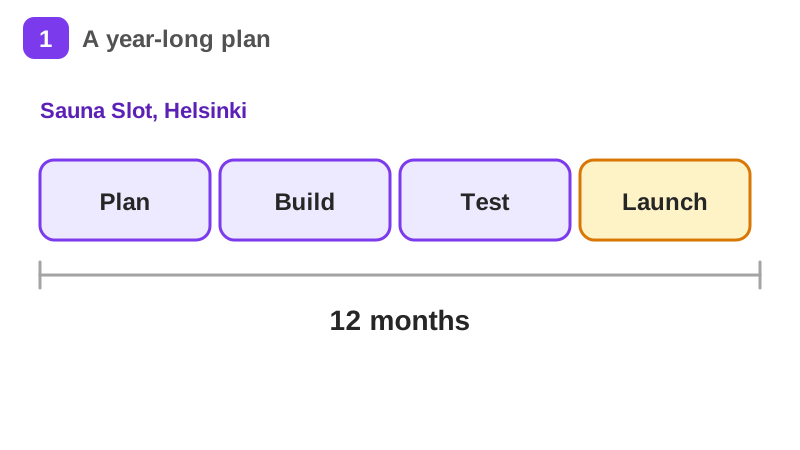
A small Helsinki startup team builds a sauna booking app over three sprints, and every role, artefact and event is drawn on the same board and the same tickets.
Your practice task
Plan one sprint for a small project of your own, such as a portfolio site, a job-search push or a family event. Write a backlog of 8 items as user stories, ordered by priority, each with a relative size. Pick a sprint goal in one sentence, pull the items that fit one week, and write a short review note: who you will show the result to and what you will ask them. Put it in a Google Doc or a Trello board and submit the link as your proof.
What is inside
- Why agile exists
- Scrum: roles, events, and artifacts
- Kanban and when to use it
- User stories and estimating work
- The ceremonies, and how to spot bad ones
- Tools, and the ways agile goes wrong
and 1 more page
Finish with a short quiz to earn your certificate.
More in Product manager
- Product management essentials42 min · 11 pages
- Project management essentials32 min · 11 pages
- UX design fundamentals37 min · 12 pages
- Figma basics for UX and product roles25 min · 10 pages
- Jira and Confluence for product and project roles26 min · 12 pages
- Linear for product and engineering teams21 min · 10 pages