
AI engineering fundamentals
AI engineering fundamentals is a free, beginner online course from Herizon.
Build one AI feature end to end: call a model API, write the prompt, add retrieval over your own docs, measure quality, cost and latency with an eval set, add guardrails and ship it behind a flag.
You finish with AI Engineering, LLM APIs and AI Evaluation added to your Herizon profile.
Free · 58 min read · certificate when you pass the quiz · part of Technical founder · last updated 9 November 2026
Free account, about two minutes. You can join if you live in the EU, EEA, UK or Switzerland, or a partner organisation invited you.
Already have an account? Open it in the portalA look inside the course
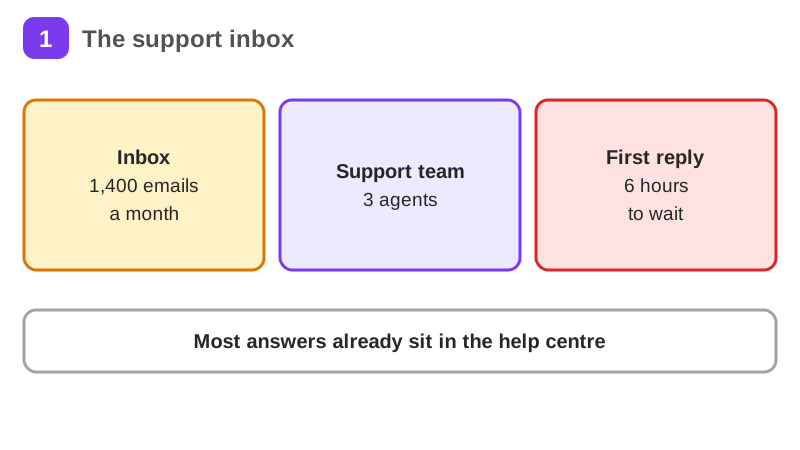
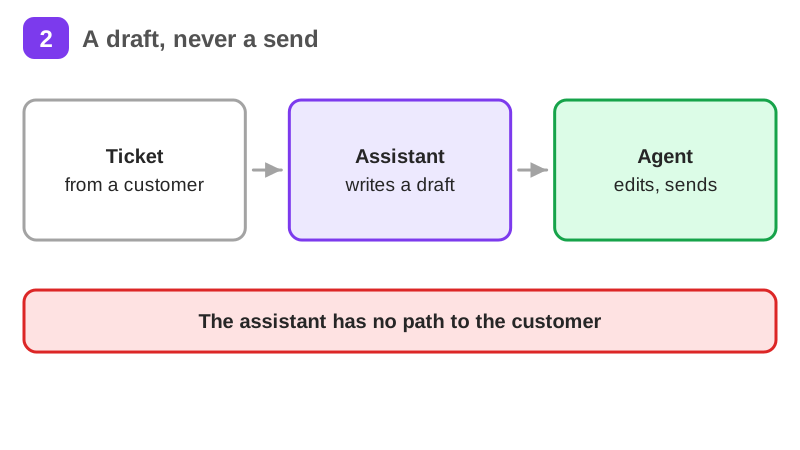
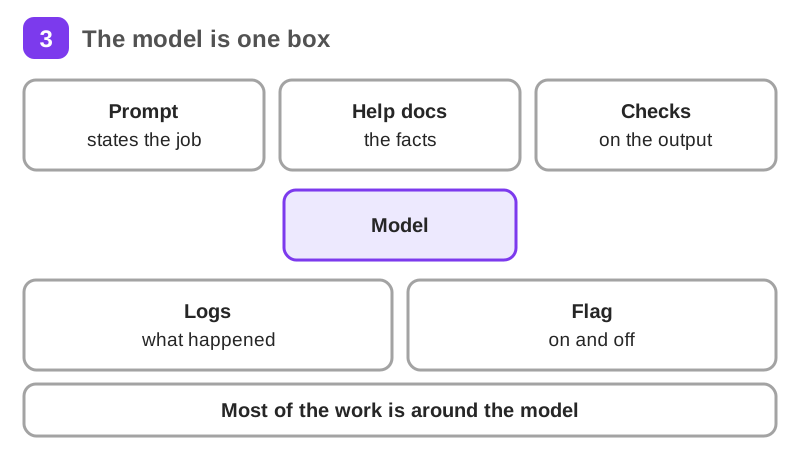
Ronja is a junior developer at Kaluvo, a shift-scheduling app for small restaurants and cafes in Tampere. Her CTO Jussi gives her a task: make the support inbox faster with a language model. Over this course she builds that feature end to end. Ronja, Jussi, Pirjo and Kaluvo are a worked example, not real people or a real company.
It takes about 58 min of reading, plus exercises, a short quiz and a practice task. It teaches AI Engineering, LLM APIs and AI Evaluation. Pass the short quiz at the end to get a certificate.
What you will be able to do
Who it is for
Developers and career switchers who can write a small program and want to build with language models: junior developers, data analysts who code, and technical founders adding AI to a product. It is not about training models, which is what the machine learning fundamentals course covers.
The situation you work through
Ronja, a junior developer at Kaluvo, a shift-scheduling app for small restaurants in Tampere with 9 people, builds a draft-reply assistant for 1,400 support emails a month: a first model call, a prompt checked by code, retrieval over 140 help articles, an eval set of 60 tickets that scores 27, 46, 49 and then 52 against a bar of 50, guardrails, one read-only tool and a flagged rollout to a support team of 3.
Your practice task
Build one small AI feature that answers questions from documents you are allowed to use. Write 20 eval cases with their checks and a ship bar before you write the prompt, including 3 adversarial cases. Call a model API from server code, add retrieval over the documents, and run the eval on two versions. Report the passes for each, tokens per call, a monthly cost estimate from today's prices, and the median and p95 latency. Add one input rule and one output rule with a case that tests each, and write a rollout plan with a flag and an off switch. Submit one page and a repository link without keys or personal data.
Key topics
- What AI engineering is
- Your first model call
- The prompt is a spec
- Tokens, cost and latency
- Retrieval over your own docs
- An eval set before opinions
and 6 more pages
What you get when you pass
A certificate with your name, the course and the date. Sharing it is your choice. If you share it, it has a public link that anyone can open to check it, and you can add it to LinkedIn.
Common questions about AI engineering fundamentals
- Is AI engineering fundamentals free?
- Yes. The course is free with a Herizon account, and the account is free too.
- How long does AI engineering fundamentals take?
- It takes about 58 min of reading, plus exercises, a short quiz and a practice task. You can stop and continue later, because the portal keeps your place.
- Do I get a certificate?
- Yes. Pass the short quiz at the end to get a certificate you can share, for example on LinkedIn.
- What do I need to start?
- A free Herizon account. The course is written at beginner level.
- Who can join Herizon?
- You can join if you live in the EU, EEA, UK or Switzerland, or a partner organisation invited you.
- Who is AI engineering fundamentals for?
- Developers and career switchers who can write a small program and want to build with language models: junior developers, data analysts who code, and technical founders adding AI to a product. It is not about training models, which is what the machine learning fundamentals course covers.
Start AI engineering fundamentals free
Start this course freeCommon questions about AI engineering fundamentals
- Is AI engineering fundamentals free?
- Yes. The course is free with a Herizon account, and the account is free too.
- How long does AI engineering fundamentals take?
- It takes about 58 min of reading, plus exercises, a short quiz and a practice task. You can stop and continue later, because the portal keeps your place.
- Do I get a certificate?
- Yes. Pass the short quiz at the end to get a certificate you can share, for example on LinkedIn.
- What do I need to start?
- A free Herizon account. The course is written at beginner level.
- Who can join Herizon?
- You can join if you live in the EU, EEA, UK or Switzerland, or a partner organisation invited you.
- Who is AI engineering fundamentals for?
- Developers and career switchers who can write a small program and want to build with language models: junior developers, data analysts who code, and technical founders adding AI to a product. It is not about training models, which is what the machine learning fundamentals course covers.
More in Technical founder
- Vibe coding: build a small app with an AI coding tool27 min · 12 pages
- Building apps with Lovable26 min · 10 pages
- Git & GitHub for beginners38 min · 11 pages
- Getting started with Claude Code30 min · 15 pages
- Web development fundamentals50 min · 11 pages
- TypeScript fundamentals40 min · 11 pages
- API fundamentals49 min · 11 pages
- Supabase: build a backend without backend code43 min · 11 pages
- Vercel: deploy and ship fast26 min · 11 pages
- Cloud fundamentals31 min · 11 pages
- Cybersecurity fundamentals37 min · 11 pages
- Build your own bot with the Grok API36 min · 11 pages
- AI coding assistants: GitHub Copilot and OpenAI Codex22 min · 11 pages
- Take payments with Stripe29 min · 11 pages
- Cloudflare for small projects: domains, DNS and Workers25 min · 10 pages
- Build apps with v0 and Bolt37 min · 11 pages
- Java for beginners30 min · 11 pages
- Working as a junior software engineer in the Nordics27 min · 11 pages
- DevOps fundamentals: Docker, CI/CD, Kubernetes and Terraform28 min · 10 pages